Alleluia Cone
The Satanic VersesAlleluia Cone is an Everest climber known as the Queen of Everest, a teacher, and the partner whose return repeatedly offers Gibreel Farishta the possibility of beginning again. Her ascent without oxygen makes her a figure of extreme self-reliance, while her encounters with apparitions and her turbulent relationship with Gibreel place her at the novel’s meeting point of physical ordeal, uncertain vision, and unfinished emotional business.
Identity and Background
Alleluia is introduced through an arresting contrast between her appearance and the mountain world associated with her: her hair is nearly white, and her skin is likened to mountain ice. The press gives her a public identity as a conquering climber, while schoolgirls know her as a pale, seemingly unchanging figure whose complexion resists the high-altitude sun. At the time of her ascent with the Collingwood expedition, newspaper coverage casts her as Snow White among the expedition’s seven men. The nickname makes her conspicuous, but does not capture the disciplined, self-contained character she presents to Gibreel and to her pupils.
Her family history is tied to ideas as well as to people. Her father, Otto Cone, was an art historian and biographer of Picabia. When Alleluia was fourteen, he told her that the idea of a continuum was among the most dangerous lies people are taught. This lesson returns to her in altered settings: high on Everest, an apparition makes her remember the old study where he spoke, and later, at altitude, the idea seems emptied of meaning. Her mother, Alicja Cohen, is connected to Alleluia’s adult life through the car she gives her daughter before an extended stay in California.
Climbing, Visions, and the Mountain
Alleluia’s most defining achievement is her ascent of Everest without oxygen. During the climb, she and Sherpa Pemba are the second pair approaching the summit. Conditions are clear, and Pemba, who has never reached the top, becomes unusually serious. Alleluia had not planned to climb without oxygen, but when she sees that Pemba intends to do so, she decides to follow. The choice becomes a defining part of her reputation: Gibreel later cites her climb to explain why he would cross the world to be with her, recalling the summit’s height as approximately twenty-nine thousand feet.
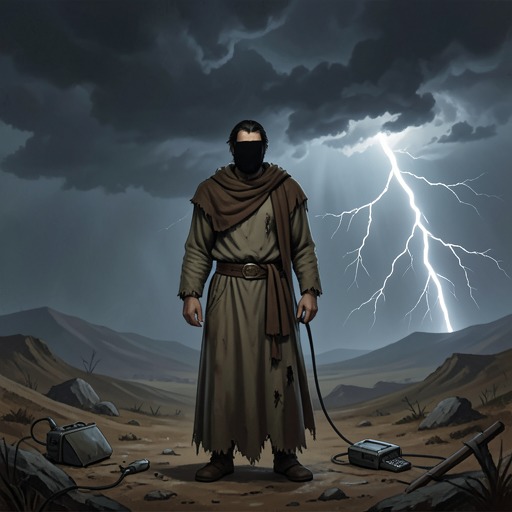
The ascent is accompanied by visions that Alleluia herself treats cautiously. After passing through the icefall, she sees a man seated on an outcrop in a lotus position, wearing a tartan tam-o’-shanter and chanting. She identifies him as the ghost of Maurice Wilson, who attempted a solo Everest ascent in 1934 after preparing through fasting, flew a light aircraft as high as possible, and then continued upward after crash-landing. In Alleluia’s account, Wilson accompanies her for the rest of the day, walking beside her or seeming to hang in the air while she works. His account of his climb and his supposed posthumous observations gives the encounter an uncanny mixture of the practical and the fantastic.
Alleluia does not tell her pupils everything about the encounter. In private, she recognizes the sighting as a possible sign of kinship with Wilson and as the origin of a secret ambition: to climb Everest alone. She also entertains the possibility that he may have been the angel of her death. The novel leaves the apparition’s status unresolved, making the mountain’s influence less a settled supernatural proof than a pressure on the distinction between experience, vision, and belief.
On the descent, she sees an impossible city of enormous ice formations west of Camp Six, across the Rock Band and below Cho Oyu. The sight lasts only briefly; Pemba warns her to concentrate, and when she looks again the city has vanished. The apparition pulls her memory back to her father’s warning about the continuum. At another high camp, she explains to Gibreel that Everest can silence a climber: the sight of perfection makes ordinary speech seem inadequate, though life eventually demands compromises and a return to the world. The mountain gives her an experience she cannot keep intact once she descends, a pattern that also shadows her love affair.
Gibreel Farishta and the Repeated Beginning
Alleluia first meets Gibreel while he is eating meat he regards as unclean. She laughs at him and turns away; when she turns back and begins walking toward him, he says that he falls in love. Her challenge to change his life, or recover it for nothing, meets him at a moment when his former certainty has broken down. Their first encounter is brief. After three days together, she boards a plane and leaves, while Gibreel tries to return to work and restore ordinary life despite the loss of his faith and the scandal attached to photographs of him eating ham.
They meet again in London after Gibreel arrives following his mysterious captivity. He is drawn toward the city with renewed hope and speaks Alleluia’s name. At Victoria station he falls as he rushes from the train, then sees Rekha Merchant waiting by the barrier on her carpet, a vision visible only to him. Alleluia, by contrast, finds him unconscious in the snow outside her flat. Initially she wonders whether he is another visual aberration, but carrying him home convinces her that he is physically real. On the seventh day, when he wakes and reaches for her, their intimacy begins again. Their renewed relationship becomes a period of intense closeness, but after three weeks Alleluia abruptly tells him to find somewhere else to live: she needs more room, and the deeper the intimacy, the more forcefully she retreats from the love she desires.
That pattern does not end the relationship. When Gibreel’s mental illness becomes unmistakable, Alleluia recognizes in his face a panic and anguish she has seen before in her mother. He does not deny or rename his illness, but its recognition leaves him vulnerable and subdued. Alleluia becomes determined to help him recover and to remain with him through the crisis. Her care is practical as well as emotional: she insists that he stay away from film people after his previous rampage and keeps him under close supervision, including daily medication because of the risk that his paranoid schizophrenia will recur.
Care, Conflict, and Separation
The responsibility of caring for Gibreel collides with his wish to resume his former life. He objects to being kept a prisoner and insists on making another attempt to re-enter it. Alleluia opposes his attendance at a party involving film people, but eventually agrees after a terrible argument. After an incident in which Gibreel attacks a man, she seeks out Saladin Chamcha, tracking him through Sisodia, Battuta, and Mimi. She apologizes for the way she had spoken to him and explains that Gibreel has been asking for him. She and Gibreel have taken a place in the north, away from other people, and she asks Saladin to help.
Her willingness to seek help does not make her relationship with Saladin uncomplicated. When they meet, he feels his hostility toward Gibreel extend to Alleluia: her cool gaze and self-contained manner make him treat her as part of the opposition before she has even spoken. His reaction reveals how easily she becomes peripheral to the men’s conflict, even when she is the person carrying much of the work of caring for Gibreel. Later, as Gibreel returns to Bombay, Saladin recognizes that Alleluia has refused to take him back after the Brickhall fires. He reflects that the people involved have again failed to consult the person most injured by their decisions.
After Gibreel leaves her flat, Alleluia returns to find the apartment vandalized. He has destroyed the mountain reminders she collected: the ice Everest kept in her freezer, the parachute-silk peaks above her bed, and a carved wooden memento of her ascent that Pemba gave her as both warning and commemoration. She decides she will not take Gibreel back, regardless of the state in which he might return or how urgently he might ask for forgiveness. The destruction turns the mountain objects from shared symbols of her achievement into evidence of a rupture she no longer intends to repair.
Ending and Narrative Significance
Alleluia later appears among an international team of mountaineers arriving in Bombay to attempt an ascent of the Hidden Peak. Saladin reads her name in the newspapers and experiences her return as a haunting: the shades of imagination seem to be entering the actual world, and events acquire the slow logic of a dream. His response echoes her lessons about ghosts and Gibreel’s earlier attempts to begin again. For Saladin, her presence signals unfinished business, although the return does not lead to a reconciliation with Gibreel.
A later newspaper report says that Alleluia has fallen to her death from the roof of a skyscraper. The report calls her death a related incident in the same account that describes the discovery of S. S. Sisodia’s body in Gibreel’s apartment, but it does not establish the circumstances connecting the two deaths. Her final appearance therefore preserves the novel’s uncertainty rather than resolving it. The climber who pursued the summit and imagined an unaccompanied ascent is finally represented through a public report, while the people around her continue to interpret her life through their own guilt, memories, and unfinished conflicts. Her independent ambitions and her care for Gibreel are both real, but the narrative repeatedly shows how easily others make her life secondary to their stories.